If you’re considering putting a manufactured/prefab home on solar — whether it’s the off-grid flavor to eliminate the hassle of pulling a utility line and the cost of ongoing power bills or a grid-independent setup to boost energy resilience and slash electricity costs — the energy conversation should start before you purchase the unit to ensure that it’s outfitted with the right appliances.
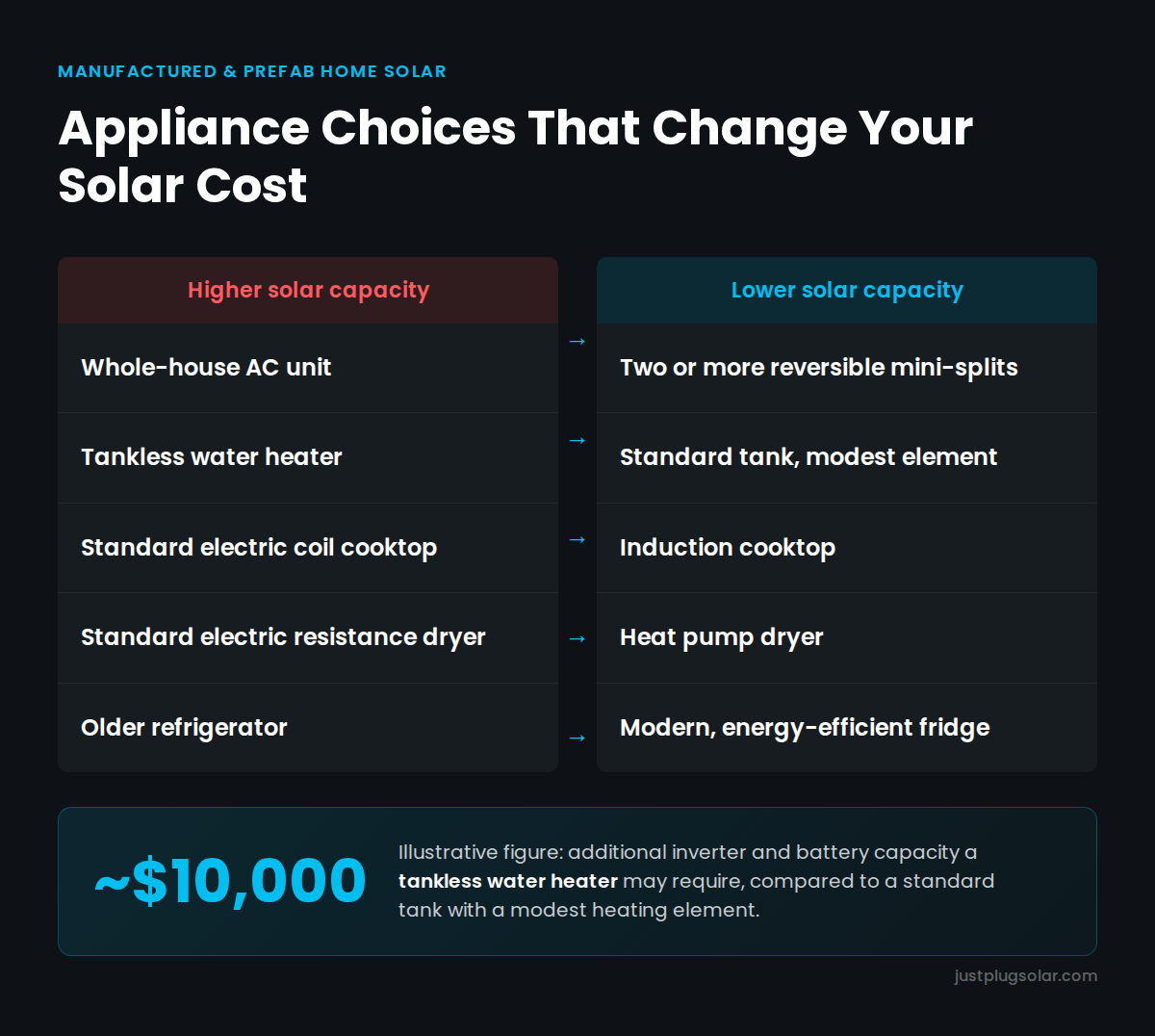
Why? Because that could help you save a pretty penny on solar capacity (i.e., we actually sell you less stuff if we have that conversation!) For example, running a tankless instant water heater could mean an additional $10k of inverter and battery capacity compared to a traditional water heater with a modest heating element.
Then, consider appliances that run infrequently but draw substantial power. For instance, you may save a few thousand bucks in solar capacity by putting that industrial welder you use 2.3 times a year on the grid or generator.
An energy audit of the proposed house plan, your preferences, and usage patterns helps you understand trade-offs, explore alternatives, and save money on solar capacity without compromising the quality of life. You can then work with the manufacturer to spec the unit for the best outcomes. Here’s how.
Understand your choice of power source
Most people have three power sources at their disposal: The grid, solar, and a generator.
If you already have a grid connection but want to build energy resilience against outages and skyrocketing rates, a grid-independent setup is your best bet. It uses solar and battery storage as the primary power source. Unlike grid-tied solar, it works regardless of the grid’s status.
The system switches to the grid when you run an unusually large load, or solar is insufficient during long stretches of low-production, cloudy days. Since the grid is available as a backup, you don’t have to pay for solar capacity for edge cases, lowering initial costs and shortening the payback time.
If you don’t have an existing grid connection, an off-grid solar system is the most cost-effective way to bring power to a remote structure. We typically design a system to handle the day-to-day load with sufficient margin. Then, we connect an auto-start generator to cover the very rare occasions when you run an extremely large load that exceeds your solar capacity.
It’s not uncommon for many rural homes to have propane water heaters, clothes dryers, furnaces, stoves, and ovens. You can choose an electric or propane version of these appliances depending on your budget, preferences, and how frequently you use them. You can often request the manufacturer to install your preferred option.
For example, if you use a clothes dryer once a week, you may consider a propane one to lower initial solar cost. However, if you use it daily, investing in more solar capacity typically pays off because you can save substantially in propane fuel cost.
The rule of thumb on what goes on solar and what stays on grid or use propane:
Constant loads that run frequently or 24/7, such as AC, Starlink, fridges, pumps, and a water heater tank with a moderate heating element, are ideal for solar.
An infrequent, heavy load, such as a large air compressor, clothes dryer, or oven, may be left on the grid or propane.
Substitute high-draw appliances with solar-friendly ones
In addition to continuous draw, we consider an appliance’s surge rating because it may affect inverter selection and capacity. We help our clients review manufactured home specs, identify appliances that may increase solar requirements, and explore alternatives. For example:
A whole-house AC unit is often not energy-efficient. We generally recommend installing two (or more) reversible mini-split units to reduce solar capacity required while adding redundancy.
Old fridges can be a power hog. Invest in modern, energy-efficient fridges and chest freezers to make your solar investment go further.
If you use an electric stove, an induction one pulls less continuous power than a standard electric coil cooktop for the same cook time.
Tankless instant water heaters require substantial inverter capacity to jolt into action. Instead, use a traditional water tank and replace any aggressive heating element (e.g., 4.5kW) with a modest one (e.g., 0.8 to 1kW).
If you prefer an electric dryer, consider a heat pump version over a standard electric resistance one to reduce load requirement.
If the structure is for vacation or short-term rental (e.g., Airbnb), consider a broader range of behaviors and set expectations to optimize solar costs without compromising the guest experience.
An energy efficiency audit to maximize your solar investment
Before buying a manufactured home and putting it on the site, perform an energy audit to ensure you have a solar-friendly setup. We can also assess your site, calculate solar production potential, and evaluate siting options to help you make the right choices.
Getting the right information early is key to avoiding unpleasant surprises further down the road. If you’re planning to purchase a manufactured home or prefab structure, let’s talk.