Why Post-Implementation Remote Monitoring of Off-Grid Solar is Awesome
Most people assume that an off-grid solar project is a one-and-done affair: panels go up, the inverter turns on, power flows, and that’s it.
In reality, commissioning is just the starting point. Solar systems are dynamic electrical environments influenced by weather, loads, firmware behavior, and real-world wiring conditions — none of which is static.
Modern off-grid solar solutions use high-quality equipment that supports remote monitoring and optimization. The ability to fine-tune as conditions evolve makes the difference between a system that simply runs and one that performs optimally for years, even if operating conditions or requirements change.
Modern, high-quality solar equipment enables remote visibility
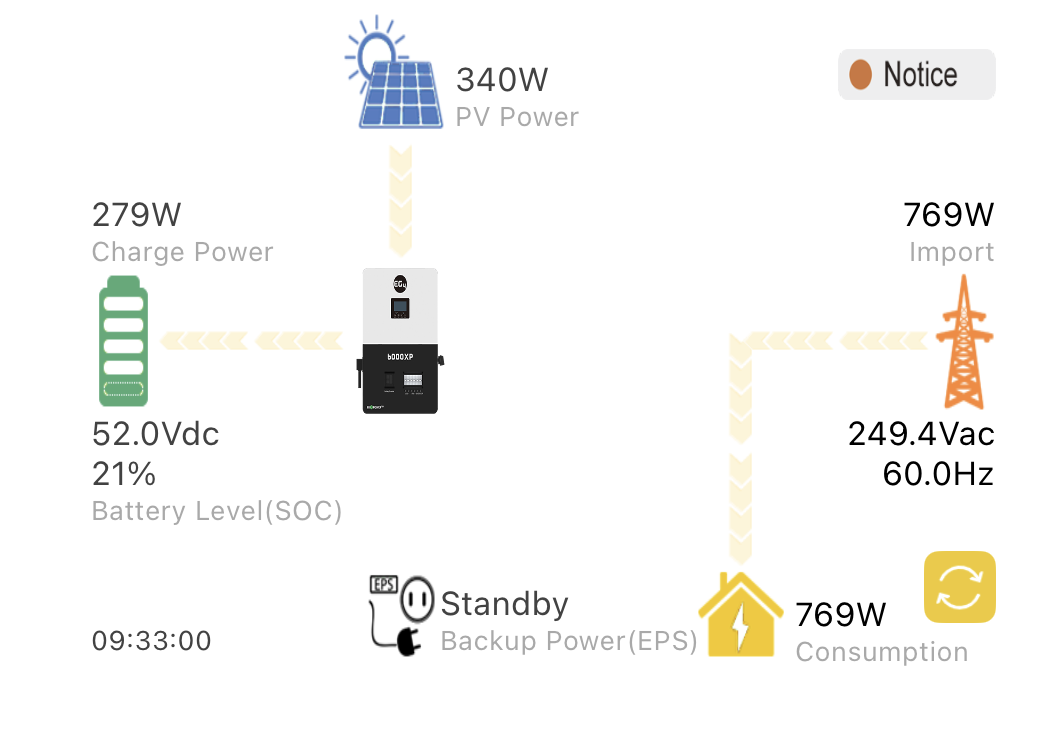
Today’s high-quality inverters and energy storage solutions feature built-in communication modules. These integrated monitoring firmware, web-based dashboard, and remote configuration tools allow access to performance data via the internet.
A service provider can view live operating conditions, historical performance data, and diagnostic information without being on-site. Instead of guessing what’s happening inside a system, they can observe its behavior in real time.
As a result, you get a solution that behaves more like a managed infrastructure asset responsive to shifting requirements than a static appliance.
The benefits of ongoing remote monitoring
Here’s how continuous monitoring improves reliability, safety, and return on investment (ROI):
Early fault detection in redundant systems
Well-designed, resilient systems often include redundancy. When one component begins to drift out of spec, you may not observe the impact immediately — but the numbers tell the story. We use data insights to identify issues early and prevent failures.
Protection against silent failures
Some faults may not trip breakers or trigger error modes but still reduce performance or damage components over time. Data trends reveal these problems before they require expensive fixes or cause safety issues.
Longer equipment lifespan
Data insights enable us to tune battery charging curves, temperature behavior, and voltage ranges to match real usage patterns, reducing wear and extending service life.
Lower operating costs
Remote diagnostics and adjustments reduce service calls. When on-site work is required, we often arrive with a good understanding of the issue, which helps streamline troubleshooting and minimize downtime.
Higher lifetime energy yield
Fine-tuning improves system efficiency, reducing overall production and storage capacity while meeting your requirements. Even small percentage gains add up significantly over the years to help maximize your investment.
Peace of mind for remote owners
Remote monitoring helps ensure safety and continuity for off-grid solar in second homes, vacation properties, short-term rentals, or agricultural sites. Plus, who wants to come home to a fridge full of rotten food after a vacation?
Cybersecurity without the guesswork
With connectivity comes cybersecurity risks. That’s the reality of modern life. For clients in our proactive remote monitoring program, they can rest assured that we get all the software patches and update ducks in a row promptly and correctly.
Proactive professional support
Instead of saying “good luck with that” after commissioning, we provide data-driven, proactive services in addition to reactive troubleshooting to help clients minimize downtime and failures.
So, what exactly can we see and adjust remotely?
Remote adjustment means you don’t have to wait weeks for a technician to get on-site, paying a fortune just to have someone push a few buttons. Advanced solar equipment provides a detailed window into system operation, including:
Real-time production and consumption data
PV voltage and current measurement
Battery state of charge and health indicators
Load demand patterns
Temperature readings
Historical performance graphs
Error logs and event timelines
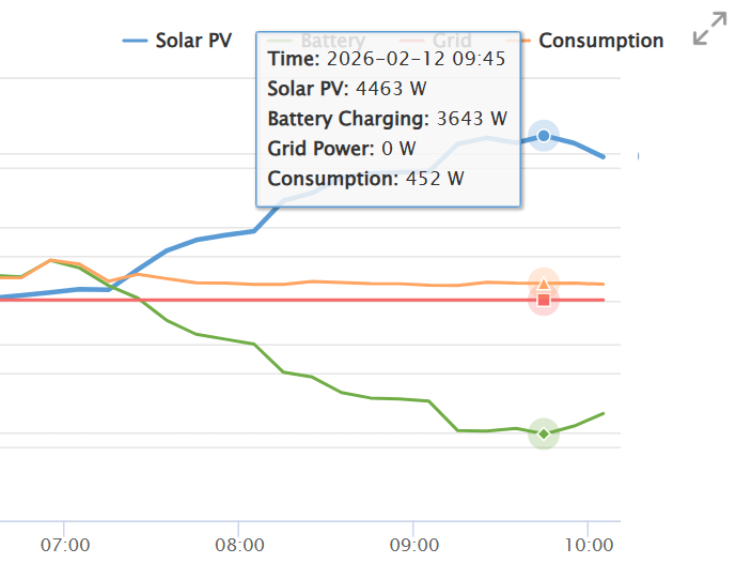
This level of visibility enables us to diagnose problems that would otherwise require hours of manual testing or trial-and-error.
Furthermore, we can adjust system behaviors remotely through a dashboard based on data insights, such as changing battery charge and discharge parameters, voltage protection thresholds, grid interaction modes (e.g., for our Resilience solution), output limits, backup generator integration settings, firmware updates, and operating schedules.
Remote monitoring in action: Adapting to real-world operations
Within the first week of an off-grid solar solution going live, we closely monitor its behavior to ensure it’s performing as intended. We fine-tune parameters based on live data and make immediate adjustments if we see abnormal readings.
After the first 30 days, our clients may join our optional remote monitoring program (we provide lifetime remote troubleshooting at no cost, but we only check the data when a client contacts us). We proactively monitor these systems, provide monthly performance reports, conduct annual on-site health checks, and offer preventive maintenance assessments.
So, how exactly do we act on data insights? Let’s look at some real-world examples:
Fine-tune solar panel output for long-term safety
We reused the client’s existing solar panel array in this whole-ranch grid-tied to off-grid solar project to reduce costs and waste. However, we could not test the panels’ production capacity before the solar solution was complete.
Shortly after the system went live, we saw that the panels performed exceptionally well, so much so that they generated a higher-than-expected voltage. We immediately went on-site to adjust the wiring, moderating the output voltage to ensure long-term safety.
Identify wiring mistakes
For the same client, we inferred from the data that the well pump was not drawing power from the solar equipment. Most likely, the electrician made a wiring mistake and left the powerful well pump on grid power. We went on-site, verified the wiring issue, and helped the client address it — putting the pump on solar to maximize their investment.
Cultivate solar-friendly habits
Most people are conditioned to run appliances, such as a dishwasher, at night when grid demand is low. However, if you’re on solar, you’re much better off running these appliances during the day because you draw power directly from the panels (i.e., you don’t have to buy battery capacity).
The first night after this client’s system went live, we noticed their battery pack was discharging a large amount of power for several hours. We shared the charts with them the next morning, and they realized that they accidentally turned on the dishwasher’s “power dry” setting.
The insights help them become more mindful of their power consumption and achieve resilience without compromising their lifestyle or buying excess capacities.
Off-grid solar as managed infrastructural investment
When you consider off-grid solar as an investment that boosts not only resilience but your property’s value, the equation changes. Proactive monitoring transforms the solution from a passive energy source into an active system optimized for safer operation, faster troubleshooting, improved performance, and longer lifespan.
Learn more about our whole-property off-grid solar solution and get in touch to see how we help you maximize your ROI while lowering the total cost of ownership (TCO).