Client Success Story: A Data-Driven, Client-First Approach to Dimensioning Off-Grid Solar
A typical interaction with solar vendors goes like this: They take a look at your house and sell you a one-size-fits-all system that’s almost always over-dimensioned because they don’t want to hear from customers complaining that the power goes out at 3 am.
An over-dimensioned off-grid solar solution can cost you an extra $30k or more without adding any value to your life. However, to avoid paying for unnecessary capacity, people must change their mindset and become active participants in their energy independence journey.
Meet Matt, our gold star client.
Matt contacted us about our Resiliency Package (which uses off-grid solar as the primary power source and Edison as backup for large loads and cloudy days) to explore how off-grid solar can help him lower electricity bills and protect against prolonged outages.
Before designing and dimensioning his solution, we had several in-depth conversations about his goals and usage patterns. Initially, the off-grid solar solution should cover day-to-day usage to lower power bills and minimize interruption during outages. Then, we’ll collect data and add more solar production and storage capacity if appropriate.
So, the question is, how do you determine “day-to-day” usage?
A data-driven, client-first approach to solar dimensioning
We whipped out our current and voltage measuring device to assess Matt’s power requirements. Everything was reasonable except a crazy booster pump — a two-horsepower appliance that could take up almost all the capacity of a 6,000W inverter.
If Matt runs the booster pump on off-grid solar, he’d need two 6,000W inverters to accommodate the power draw — driving up the cost of the solution significantly. So, we dug deeper to see how we could help Matt maximize his investment.
Do they really need the booster pump during an outage? How low does the water pressure go without the pump, and can they live with it for a few days to save a few thousand dollars?
We guided Matt through a process to test the water pressure in the house without the booster pump. The verdict is that while the water pressure isn’t ideal, they can certainly live with it for several days.
Nobody can make these types of qualitative decisions except the clients themselves. However, they need the information to know what to test and which tradeoffs to weigh. We provide data insights so that they know what to evaluate and spend money on what matters to them.
A hands-on system-build —> A cost-efficient, customized solution
Matt isn’t afraid to roll up his sleeves, and his active participation means he gets a system that meets his needs.
The solar solution consisted of 18 solar panels, a 6,000W bi-phase inverter with a built-in charge controller, and a 7.5 kWh custom-built lithium iron phosphate (LFP) battery pack named Plankton (as in, SpongeBob).
We assessed the site with Matt to find the ideal location for the solar panels. Then, we calculated the solar trajectory to determine the number of panels he needs. We also specified the incline and orientation for the solar panel frame to maximize output.
Matt decided to build a ground-mount timber frame himself. We guided him through the frame design, provided the necessary dimensions, and helped him ensure that the construction is sturdy enough to withstand the high winds in our mountain area.
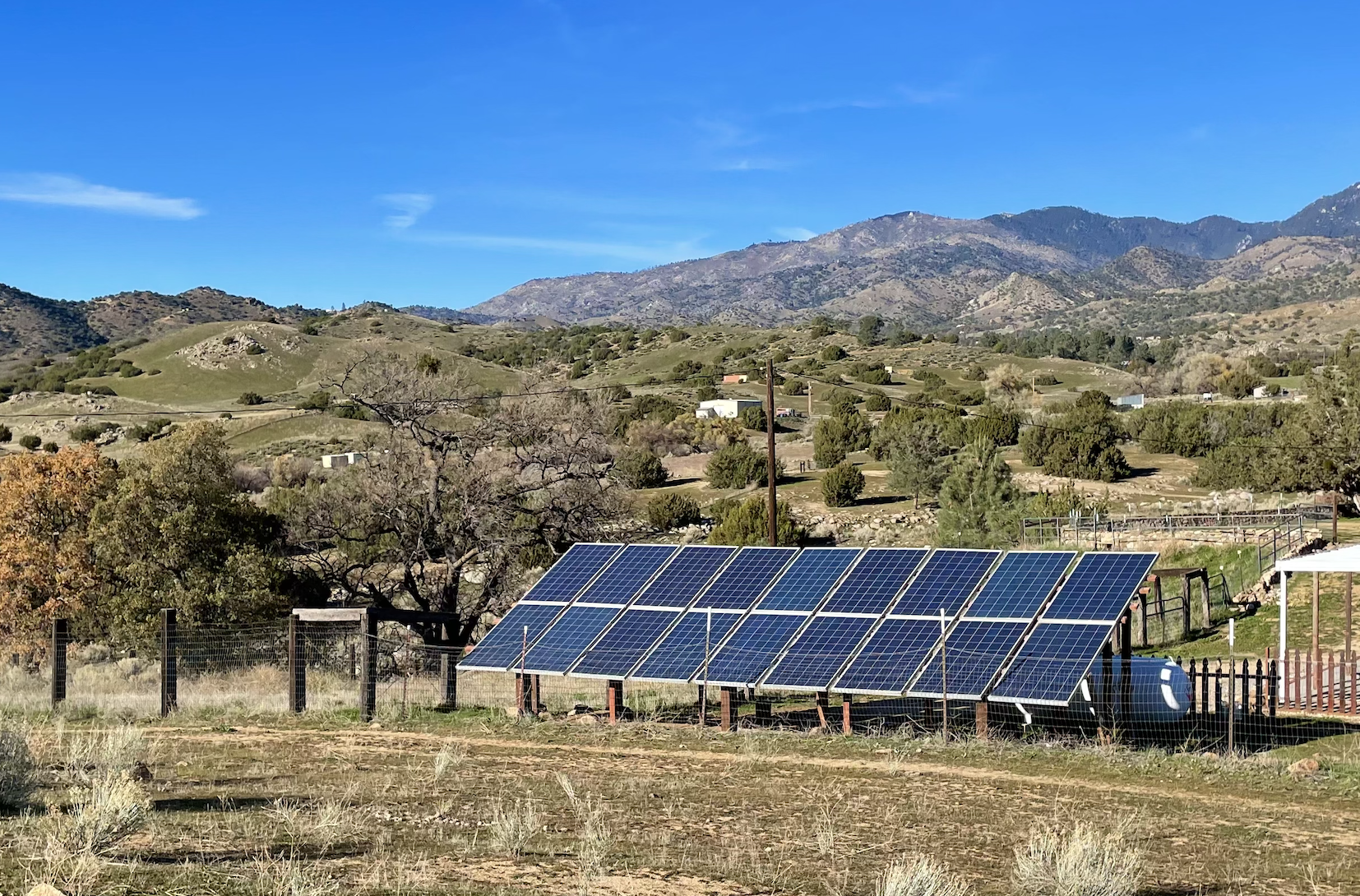
Matt’s timber frame fits harmoniously in the environment.
Matt also handled the trenching work and laid the conduits with our guidance. We worked together to identify the best location to put the solar equipment to maximize cost-efficiency (e.g., considering cable length and the operating environment). He saved a pretty penny by being part of the process.
Additionally, we incorporated a transfer switch into the design, allowing Matt to have granular control over which sub-circuits go on solar and which ones stay on Edison (e.g., those with high power requirements but not absolutely necessary during an outage, such as the booster pump or whole-house air conditioning).
The result? A customized solution that costs way less than a typical cookie-cutter solution because we designed it for Matt’s requirements and priorities.
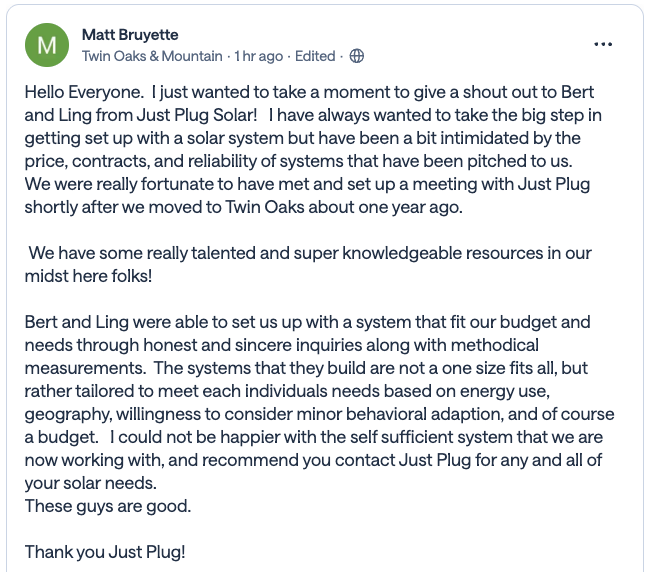
Learning and fine-tuning as part of the process
We monitored Matt’s system remotely after implementation to iron out the kinks, address potential issues, and help him become familiar with his system.
On the first night, we noticed that Matt’s battery pack was discharging a large amount of power for a few hours. We shared the charts with them the next morning, and they realized that they accidentally turned on the “power dry” setting on the dishwasher.
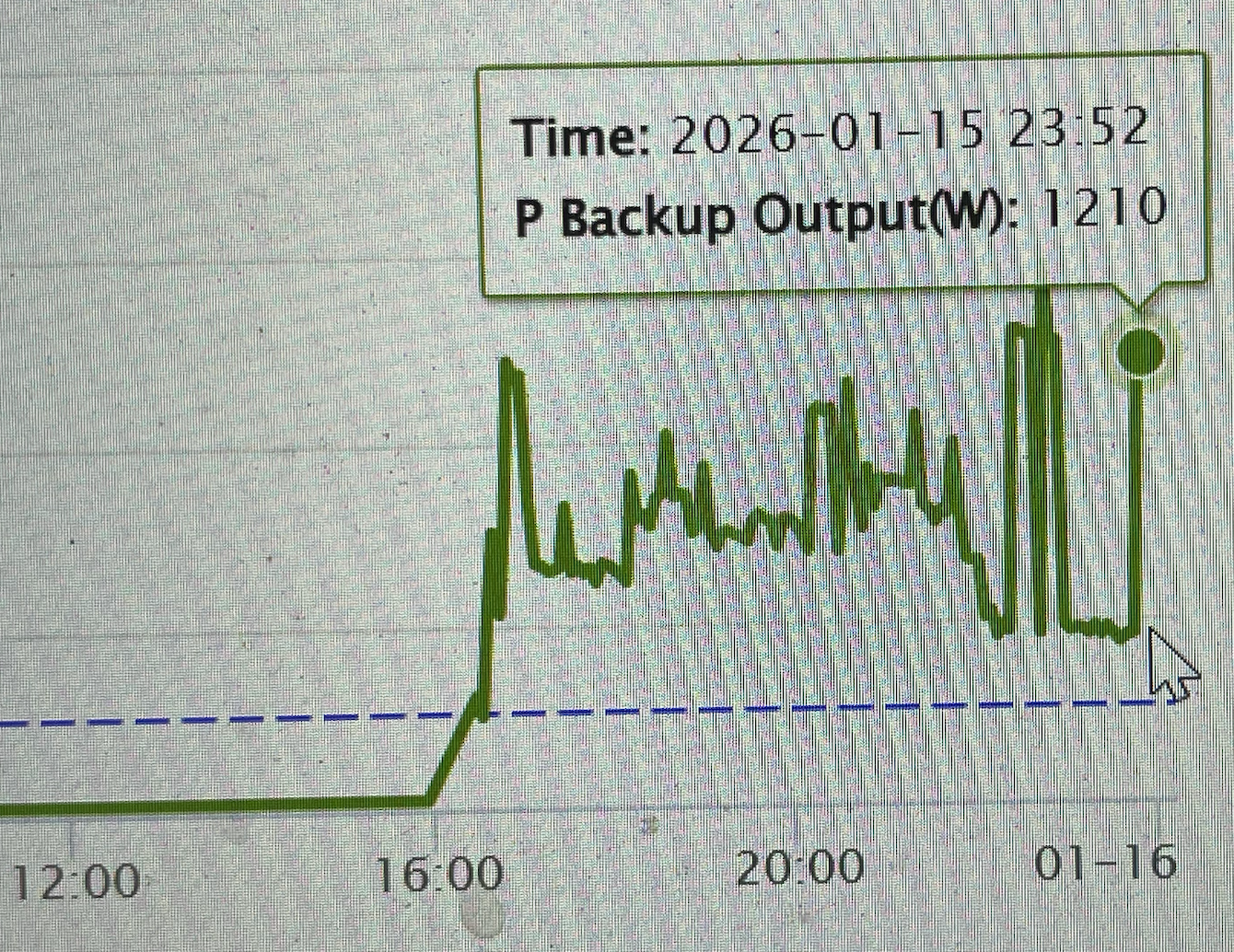
While this mishap isn’t a big deal when the system can switch over to Edison on normal days, the insights help them become more mindful of their power consumption during outages, so they have the reserve to keep what matters running — achieving resilience without compromising their lifestyle or buying excess capacities.
The proof is in the pudding
So, does the solution live up to its promise? Matt shared the usage data from SCE two weeks after implementation. He saved $84 in power bills in just 10 days (in January, when solar production is at its lowest, no less) and is on track to cut a significant portion of his monthly bill.
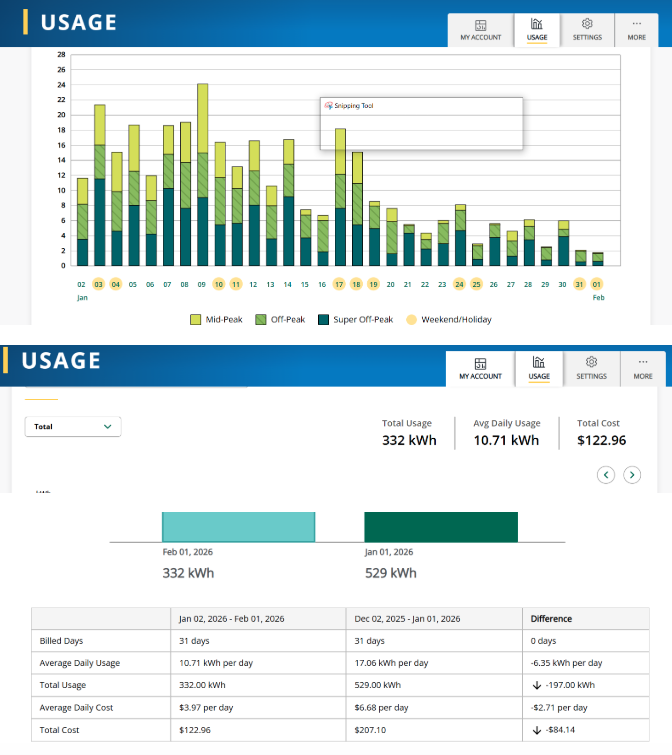
Usage data shows significant reduction in electricity cost.
There’s no one-size-fits-all solution, nor is there a one-size-fits-all path to going solar
That’s why we tailor our system design and implementation process to each client’s preferred approach to energy independence, whether they want to roll up their sleeves or not. We do, however, guide all clients through a comprehensive discovery process to design a solution that meets their requirements without spending money on capacity they don’t need.
So, yes, we ask many more annoying questions than your typical solar guy. An extra 30 minutes will save you thousands of dollars. Worth it?