Will Your Off-Grid Solar System Work for the Next Generation?
You invested good money into an off-grid solar system 15, 20, or 25 years ago, and it has served you well. However, when you pass the property to the next generation, will it work for them?
Be honest: do the lights flicker every time the fridge kicks in? Can they run the air conditioning and the microwave at the same time? Will they end up with an eye-watering propane bill because the batteries can’t hold their charge, and the generator runs frequently?
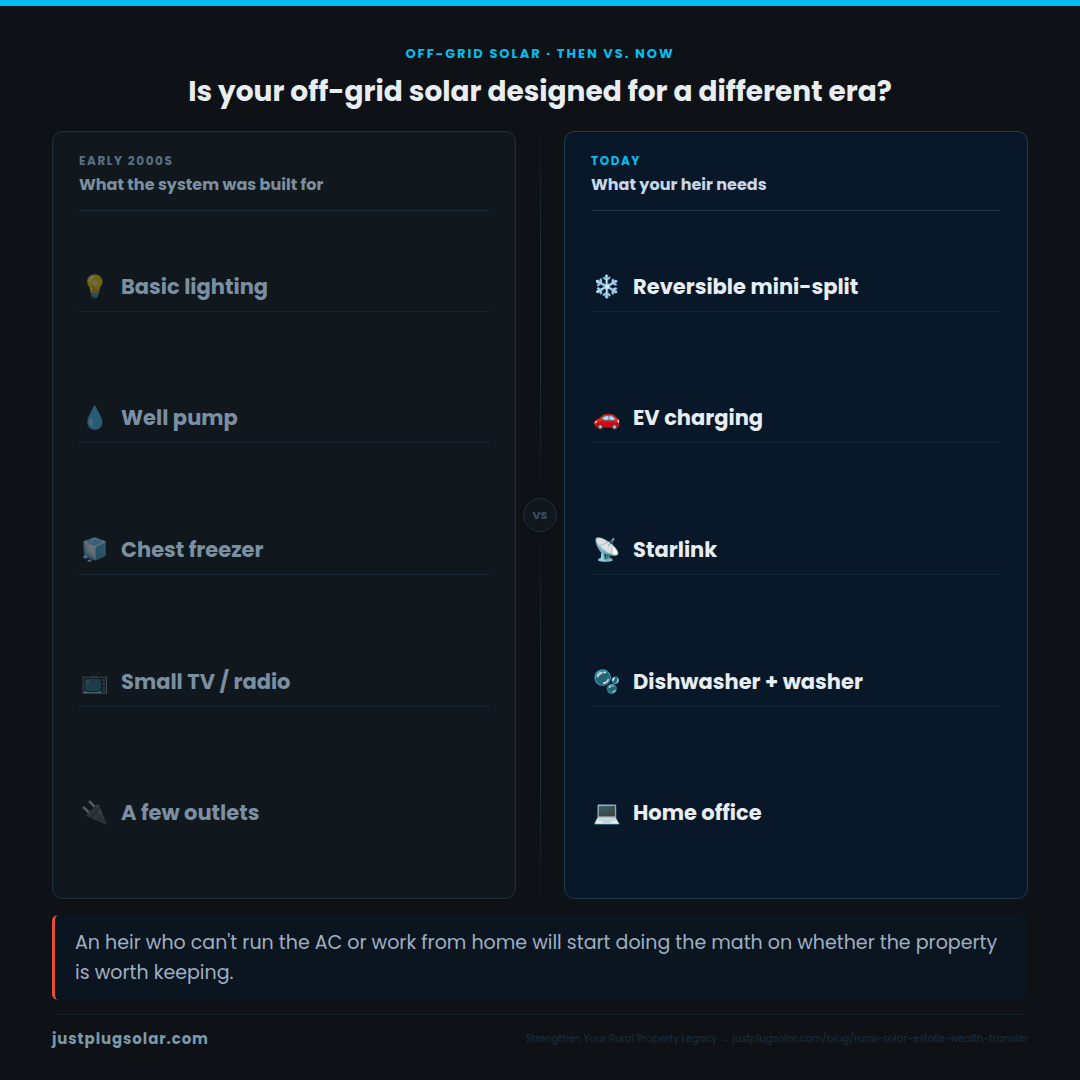
A 20-year-old system was designed for life with fewer electrical appliances and devices. We’ve seen a few systems that can’t run Starlink overnight.
Your heir will bring with them today’s standards and expectations. A system that can support modern living is an asset; one that trips every time they turn on three appliances simultaneously will be a liability — potentially deterring them from moving into or keeping the property.
Here’s what you should know about assessing and improving an off-grid solar system within the context of estate planning and wealth transfer.
Inherent challenges that come with an older system
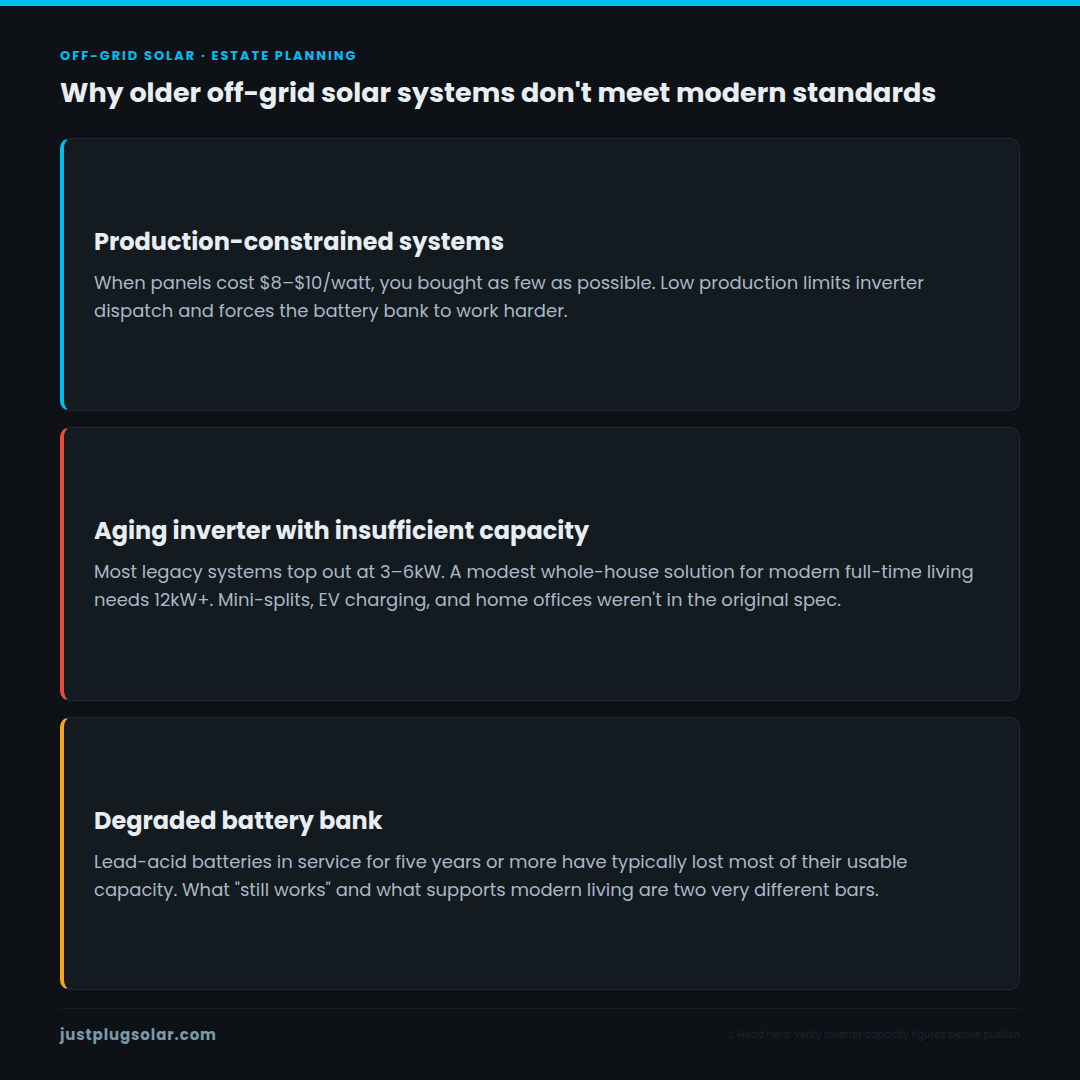
Solar panels were expensive. Systems from the early 2000s cost around $8–$10 per watt for the panels alone — before inverter, batteries, and wiring. It was common to minimize the number of panels to lower costs. However, these production-constrained systems limit the inverter's dispatchable power and force the battery banks to work harder, accelerating degradation.
Then, an older inverter often can’t support modern loads. For example, most legacy systems we’ve seen have a 3,000 to 6,000w capacity. Meanwhile, we recommend at least 12,000W of capacity for a modest whole-house off-grid solution for full-time modern living. Also, some older inverters aren’t compatible with modern battery chemistries.
Additionally, batteries degrade. It’s safe to assume that lead-acid batteries that have been around for five years or more have lost most of their capacity. And don’t get us started on the maintenance and safety concerns: lead-acid batteries require constant babysitting, and toxic chemicals can leak, harming humans and animals. Degradation means that your system’s value nosedives quickly due to compromised performance.
Two decades of field operations take a toll on any equipment, no matter how well-made it is. Moreover, most rural property owners tend to house solar equipment in sheds or pump houses, which may not provide optimal operating conditions.
A strained off-grid solar system from your heir’s perspective
A system with inadequate capacity for modern loads can cause frustrations and inconveniences. Imagine turning on the air conditioning unit while the fridge kicks in and the inverter trips. Or forgetting to let the coffee machine finish brewing before starting the toaster, and everything goes dark. Or having to wait till the washing machine is done before turning on the dishwasher. EV charging? Not a chance.
These scenarios might be ok if they’re part of the “visiting grandpa” experience. But they stack up and are no longer ok if they’re 24/7/365.
An heir might start doing the math: is the property even worth fixing, or should we just sell it as-is to get it off our back, so that we don’t have to worry about the carrying cost, pay for the upkeep, or shoulder the property tax burden?
The estate implications of an ailing off-grid solar system
A documented, functional off-grid solar system is an appraisable asset. It adds to the property's fair market value (FMV) at transfer, boosting your heir's step-up in basis under IRC §1014 and reducing their capital gains exposure if they eventually sell.
On the other hand, a degraded system that an appraiser can't document or value doesn’t contribute much on that front and may even complicate the transaction.
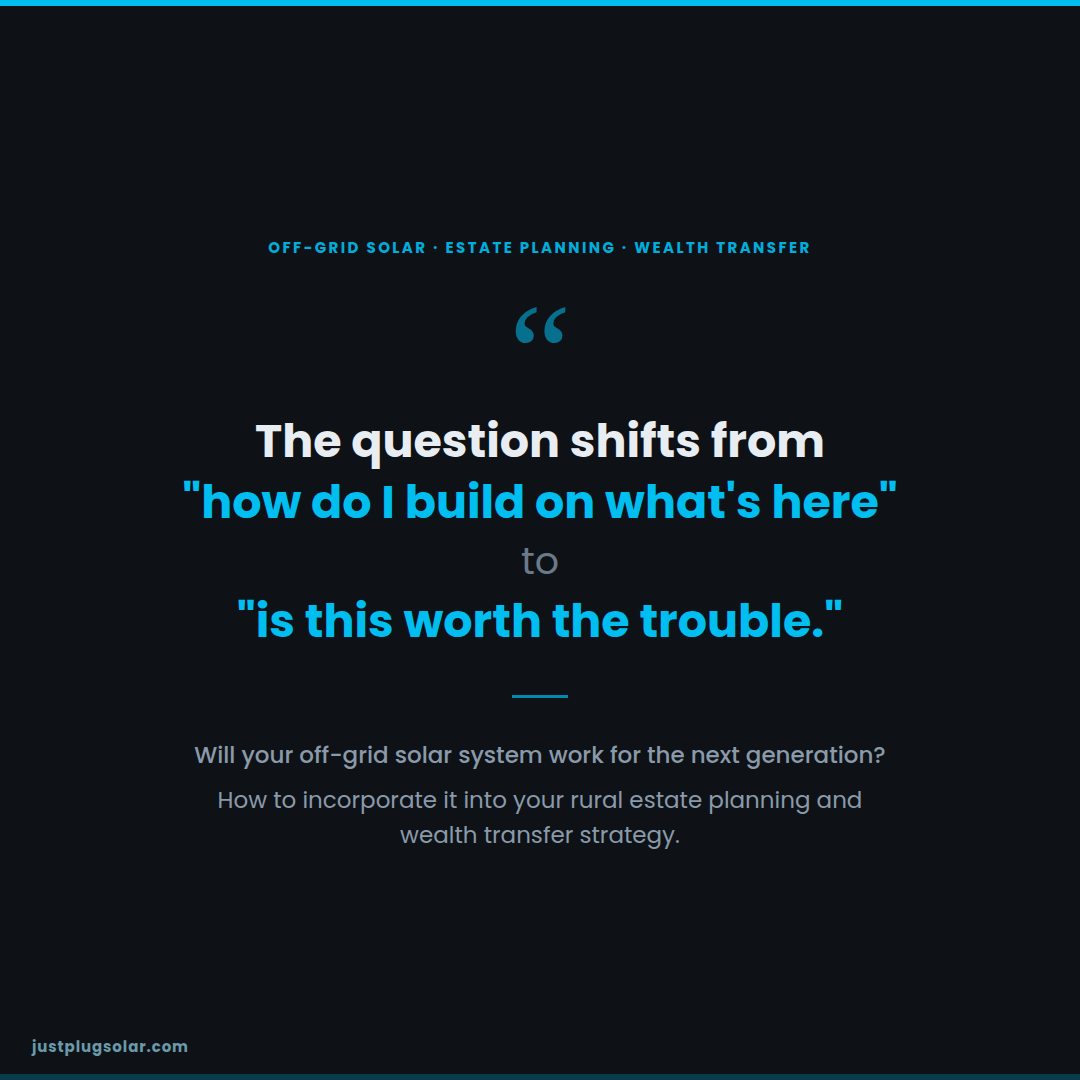
If your heir inherits a property that requires significant remediation before it's livable, they’re inheriting a project, rather than an asset. The question shifts from "how do I build on what's here" to "is this worth the trouble." That outcome is avoidable with some planning.
Keeping the lights on isn’t good enough
An operational system isn't the same as one with sufficient capacity for modern living. These questions help you determine if yours can meet expectations:
What is the battery bank's usable versus rated capacity? Lead-acid batteries should not be discharged below 50% of their nominal capacity.
Is the inverter sized for the loads your heir will run?
What is the panel output under your site's conditions?
Is the system documented and presentable to an appraiser?
Are there wiring and safety issues or fire hazards?
Hoping everything is fine isn’t a sound strategy. Instead, conduct a professional, hands-on solar assessment to have these questions answered. You should also obtain a written report that you can use as a planning document, a disclosure asset in a sale, or the foundation of an improvement roadmap to support your wealth transfer strategy.
Right-sized off-grid solar as part of your estate planning
An off-grid solar system upgrade may range from adding new batteries or addressing safety issues to a complete overhaul. The only way to know what you need to bring your system up to modern standards and boost property value to increase your heir’s step-up in basis — without spending money on things you don’t need — is an honest, professional evaluation.
Then, plan strategically. The goal isn’t the biggest system: in the context of wealth transfer, excessive capacity can push appraised value unnecessarily high and create complications under Prop 19 at transfer. Rather, build for what the property needs now and design for expandability so your heir can grow it when they're ready.