Your off-grid solar system is running. But is it safe?
A client called us because their system had gone dark. They reset it, power was restored, and they wanted to determine the cause of the problem. We asked a few questions over the phone and diagnosed the issue:
Recently, a friend helped them upgrade from flooded lead-acid batteries to lithium iron phosphate (LFP) ones. However, they neglected to change the charge controller settings to match the new chemistry.
Here’s why: lead-acid batteries require a monthly equalization cycle, while the same mechanism would create a severe overvoltage event in LFP ones. In this case, the old setting caused a voltage spike and tripped the battery’s protective measures.
We went on-site to reprogram the inverter, disable the equalization settings, and reset the charging profile for LFP batteries. But we didn’t stop there. We reviewed their setup to ensure there are no other glaring issues that could affect safety and performance.
The evaluation was less comprehensive than our dedicated off-grid solar assessment service, but it still uncovered several common safety concerns that should be addressed immediately.
Safety issues at the PV array
While the panels were performing to spec, the wiring behind them was a different story.
Grounding was inadequate as five of the six panels relied on the metal mounting frame, rather than dedicated conductors, for a ground path. This is particularly risky in rural environments where lightning exposure is high.
Also, the setup uses THHN building wire without UV protection in multiple locations. When exposed to direct sunlight, the wire degrades, causing a potential fire hazard.
Moreover, no DC disconnect switch was present anywhere in the system, and no HRC fuses were installed between the array and the charge controller. Since this circuit operates at over 100V DC, this omission is a significant safety concern. In fact, issues like this could be grounds for a fire insurer to deny a claim.
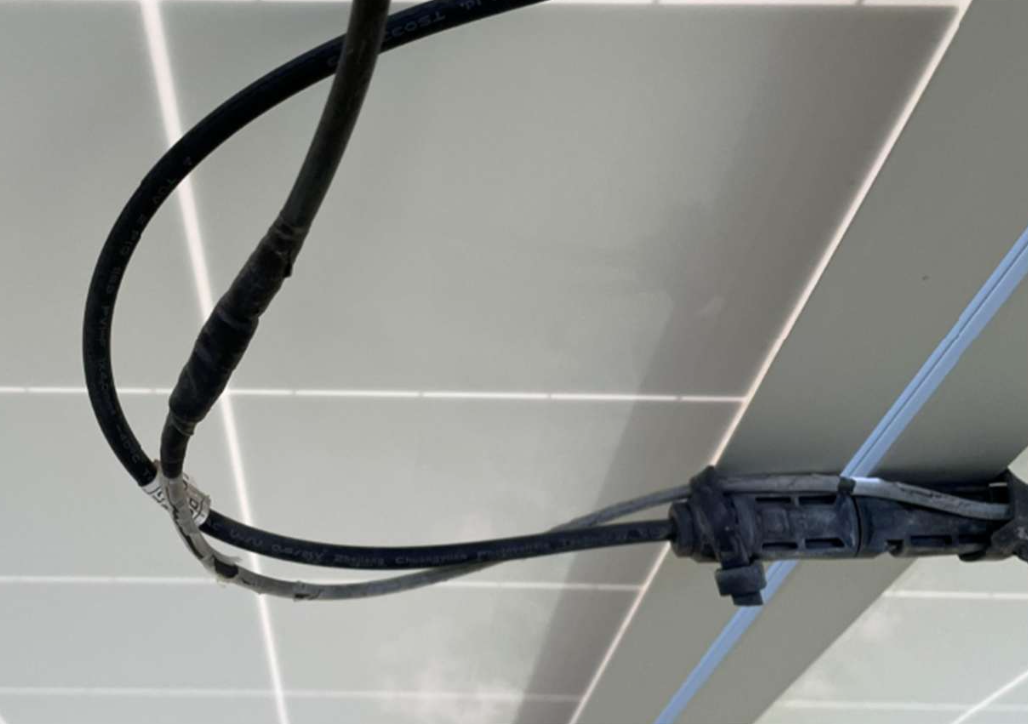
Incorrect cabling and UV deterioration.
Arc risks at the charge controller
The charge controller had other issues beyond the configuration.
Wiring on the PV input side was AWG14, two gauges undersized for currents exceeding 20A. Battery-side connections use fine-stranded wire without ferrules, and loose terminations may arc over time. Also, the cooling fan doesn’t have a filter. In a rural environment where dust is omnipresent, it will eventually seize, and the controller will overheat.
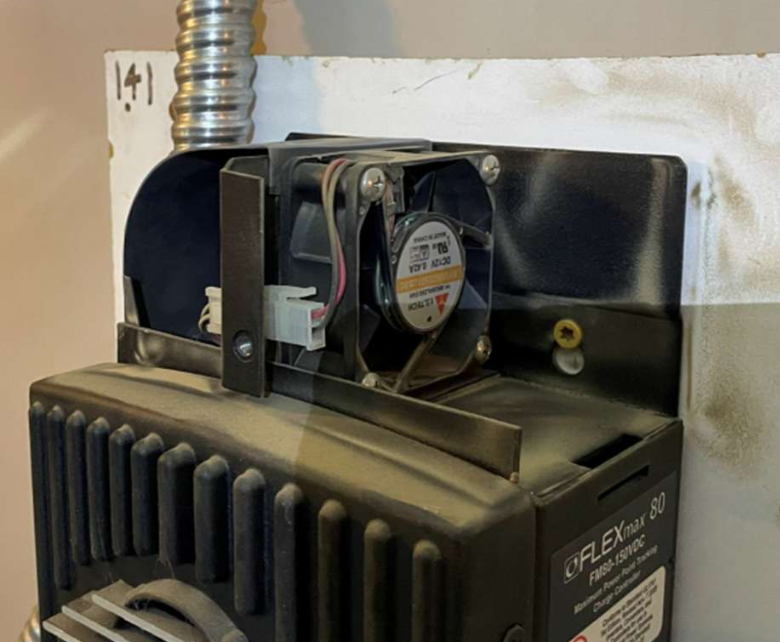
Charge controller fan is covered with dust.
Potential fire hazards at the battery bank
Neither battery had individual fusing, which is a significant omission at this current capacity. The battery interconnect cables were undersized for the load, while the positive and negative cables were not cross-connected as required for balanced current draw.
We didn’t find any anti-oxidation compound in the connections, and several of them used dissimilar metals that will corrode over time. Meanwhile, the connection bolts were overtightened: the recommended torque for these terminals is 8.5 lb-ft, but we tested one at 40 lb-ft.
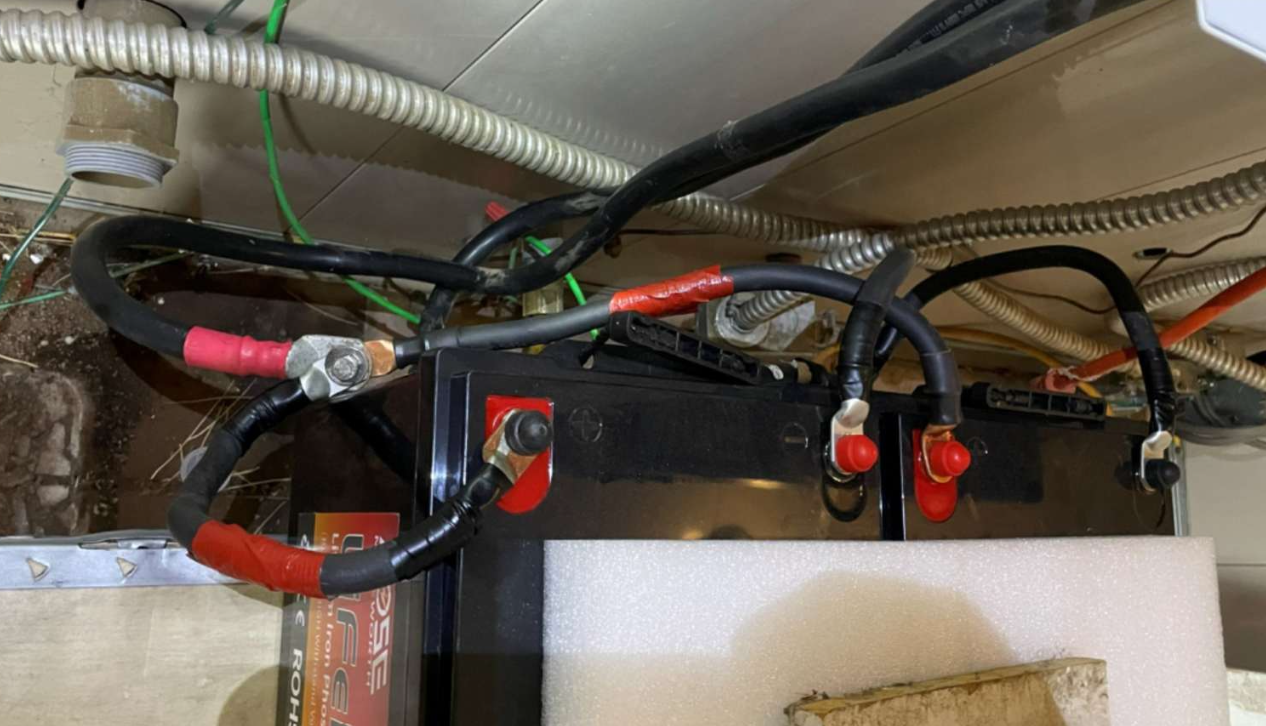
Battery wiring is done incorrectly.
Messy wiring in the solar equipment
Legacy 12V equipment remained wired into the system, creating a safety concern. 120V wires were found outside the conduit — another condition that may be grounds for fire insurance claim denial. Additionally, we found exposed wiring in the equipment shed and primary grounding connections secured with wire nuts, both of which are not appropriate for this application.
Fundamental sizing issue at the system level
The PV array can generate up to 1,500W, while the battery bank has a 15kWh storage capacity. The disproportionate dimensioning results in insufficient solar generation to charge up the batteries. They “go hungry” frequently, impacting their lifespan. We recommend adding solar panels to balance generation with storage capacity.
You get regular health checkups, so should your solar system
The reality is that off-grid systems age, settings drift, and batteries degrade. Meanwhile, ad hoc work over the years complicates the picture (“Wait, who did that??! Why??!”). The most common off-grid solar safety mistakes aren’t dramatic. They’re quiet, cumulative, and invisible until something goes wrong. 💥
Don’t wait until you’re sitting in the dark (or worse) before wondering what has gone wrong with your solar system. Schedule a safety + performance assessment to understand what you have on your hands and how to make targeted improvements.
Note: Justplug evaluates off-grid solar systems for equipment safety and performance. We are not licensed electricians and do not assess electrical code compliance. When we flag concerns, we're addressing equipment safety—not making legal or regulatory determinations.