How to Evaluate an Existing Off-Grid Solar System Before Buying Rural Property
Rural properties with existing off-grid solar systems may appear like a good deal: someone has already done the heavy lifting, the system is in place, and it seems to be working (Look, the light turns on!). The problem is that "existing" and "functional" are not the same. Neither is "functional" and "capable of supporting modern living."
Off-grid solar systems degrade over time, accumulate deferred maintenance, and are often modified by well-meaning owners or contractors who don't understand the principles or technology. Equipment was expensive 20 years ago, and many owners made compromises to balance cost with capacity.
However, what was acceptable at the turn of the century is often insufficient to support today’s full-time household with modern appliances, power tools, communication technologies, and remote-work equipment. Before you close on a property with existing off-grid solar, here's what you actually need to know.
Why "it works" isn't good enough
Most buyers rely on a seller's word that a system is operational or a brief demo that involves turning on a few lights. That's not enough. Multiple things could already have gone wrong without killing the system outright: batteries degrade, panel connections loosen, or the equipment fan gets clogged — these issues may not be detectable under light loads.
A system may appear to work, but in reality, it’s limping along at a fraction of its original capacity. The only way to ensure you’re not buying a lemon is a proper evaluation that goes beyond a visual check. Don’t skimp on a hands-on technical assessment that tests the system under real-world conditions and documents the findings.
So, what do we actually examine?
Here are the five top-line items that matter most:
1. Solar panel conditions
Physical inspection of cracks (front and back), delamination, discoloration, oxidation, and soiling is just half the story. Pro tip: not all visual imperfections impact performance. For instance, “snail trails” are typically fine. You also need to measure output because panels degrade over time, especially in harsh environments, while connections may become loose.
While you don’t have to throw out an older array that’s still generating power, you should know how much it’s actually producing to calculate if you need to add capacity. Also, evaluate string balance. Uneven output between strings can indicate shading problems, failed bypass diodes, or panels degrading at different rates.
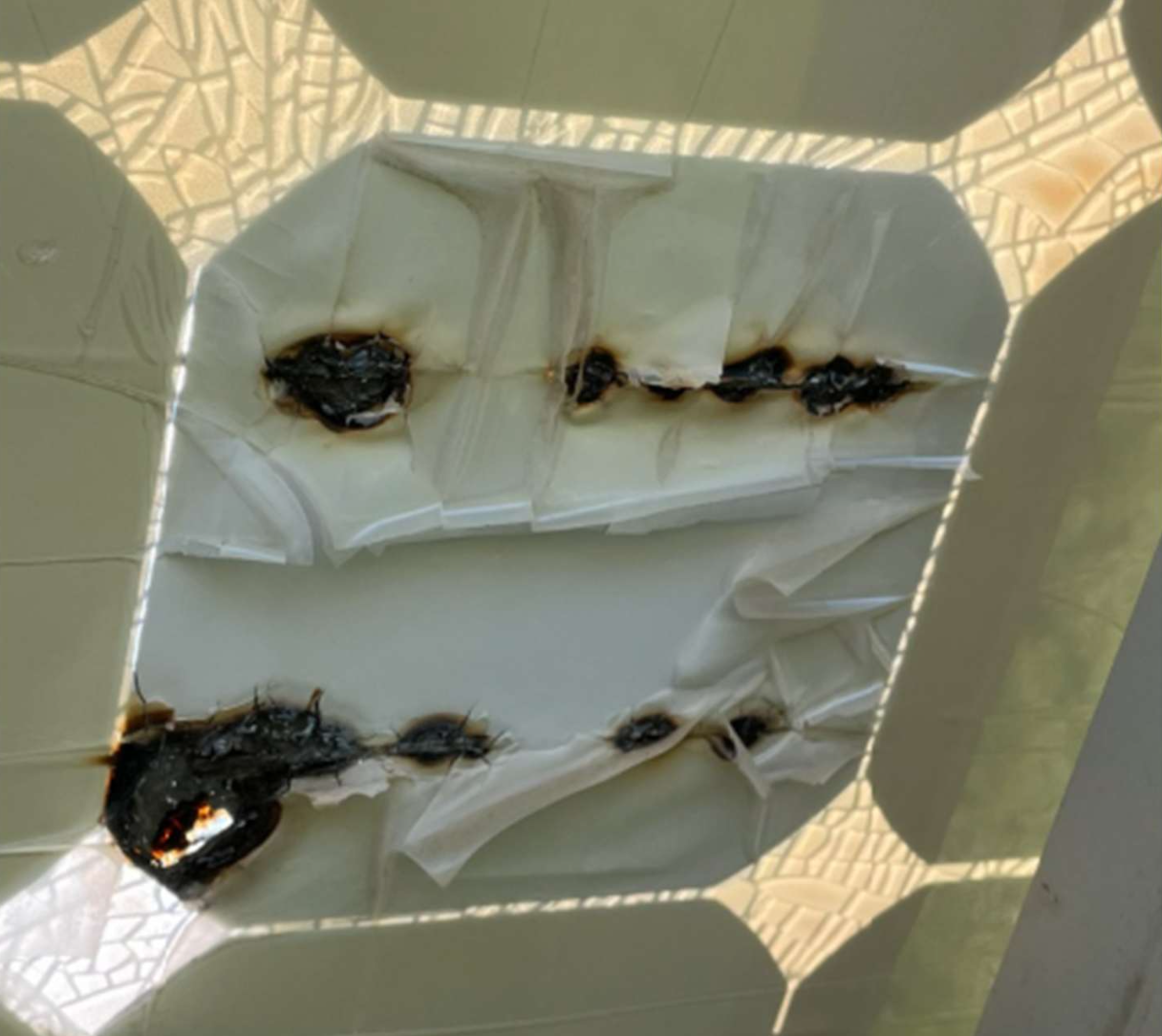
Physical damage to a PV module caused a contact break under load.
2. Battery bank size and conditions
Most lead-acid batteries in older systems are past their end of life, especially if the property owner has not followed maintenance best practices. Look out for swollen cases, corrosion, electrolyte leakage, and sulfation — these mean replacement, period. Lead-acid batteries are highly toxic and must be handled and disposed of as hazardous materials.
Even if the batteries appear intact, usable capacity may still be a fraction of the original spec. That could mean running out of power at night or on cloudy days. The system may also struggle to start appliances or tools with high surge ratings (e.g., a well pump or vacuum cleaner).
What if the system has already been upgraded to lithium batteries? Alas, not all lithium batteries are created equal. If the owner ordered cheap, fly-by-night brands from Amazon, chances are they won’t last long. The proof is in the pudding: measure the voltage and put the system through its paces to see how the batteries hold up.

Leaking lead-acid batteries must be treated as hazardous materials.
3. Array output vs. original spec
Even panels that look fine may underperform due to degradation, soiling, partial shading, or wiring issues between the array and the charge controller. That’s why we test open-circuit voltage, short-circuit current, and power delivery under typical irradiation at the charge controller, and compare the data against equipment specifications, accounting for site conditions and time of day.
If the seller has no documentation of the original system design, that's a problem in itself. You can't evaluate performance against a non-existent spec. While we can often infer information from panel labels, you should still consider the lack of documentation a red flag.
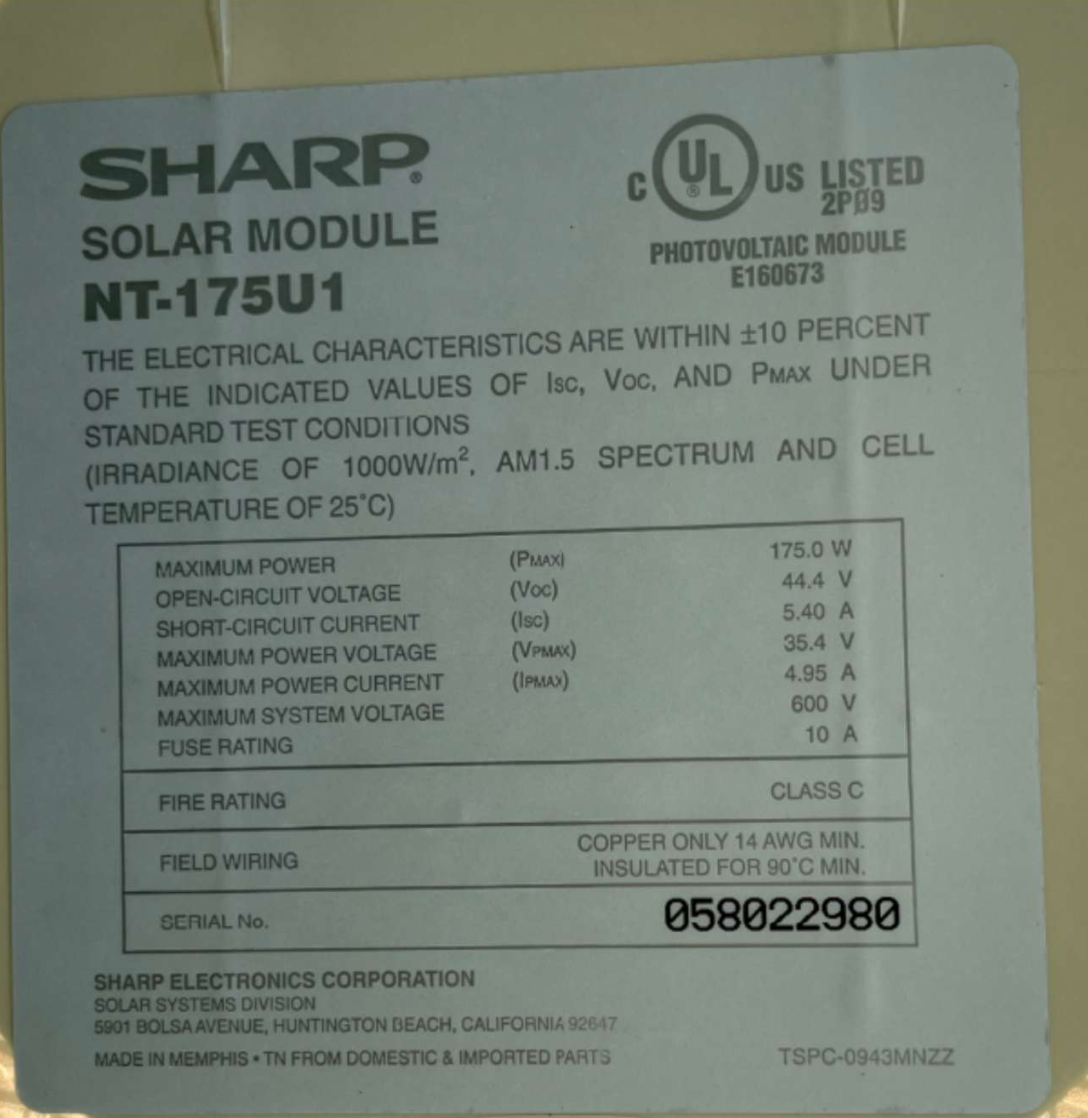
We examine labels on solar panels to calculate production capacity.
4. Inverter capacity and modern capabilities
Many inverters in rural environments, especially if housed in sheds that aren’t rodent- and dust-proof, deteriorate faster than their expected 10- to 15-year lifespan. For example, dust can clog up fans and other moving components, impacting performance. The inverters may still power basic loads and pass the “lightbulb test,” but struggle with larger ones.
Also, many older systems have 3,000W or 4,000W inverters, which aren’t nearly enough to run modern household appliances for full-time, off-grid living. For reference, we typically spec 12,000W of inverter capacity on a standalone off-grid solution for a 2-person household with a reasonably sized well pump.
Moreover, older inverters may not support modern lithium-ion batteries and often lack remote monitoring capabilities. That means you’re flying blind — are you generating enough electricity? Can you even turn on the light tonight? Do you have to wait for the batteries to charge up before making coffee in the morning? You have no way to tell.
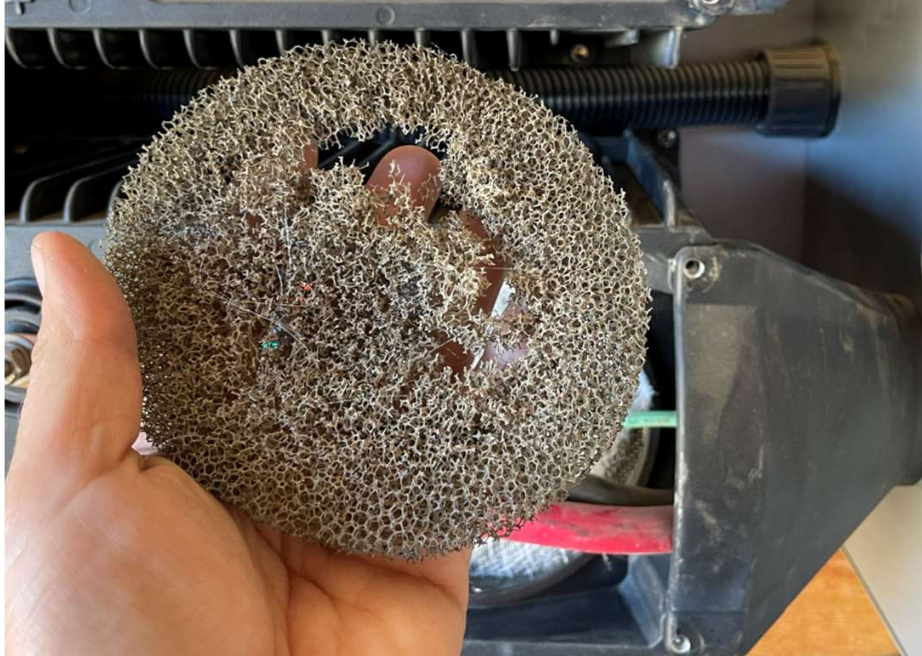
A deteriorated inverter filter.
5. Load match with usage pattern and requirements
You must also ask whether the system's design load matches your lifestyle and requirements. Let’s say the previous owner is an early bird and didn’t need much battery storage capacity for nighttime use. Meanwhile, you’re a night owl who bakes cookies with an electric oven at 11 pm. Your battery storage requirements are completely different.
Even a fully functional and well-maintained system may not be right for your use case. As such, your evaluation must consider your usage patterns, what sensible tradeoffs you’re willing to make, and how you may adjust your habits (or not) without compromising the quality of life.
Red flags to watch for when evaluating an existing off-grid solar system
While an ailing solar system isn’t enough reason to forego your dream property, you must know what you’re getting into before signing on the dotted lines. Here are some red flags indicating potential issues; you should conduct a closer investigation before committing.
Lack of documentation. Any system, especially an old one, without maintenance records, original design specs, or equipment documentation, is an unknown quantity. That doesn't mean it's worthless, but you should test it thoroughly.
Mystery lead-acid batteries. Lead-acid batteries installed on a rural property that's changed hands, been seasonally occupied, or been vacant for a while are very likely to fail. Even if the seller tells you that “they just replaced the batteries,” note that most lead-acid batteries last 3 to 5 years (with meticulous maintenance), and you’ll likely need a replacement soon.
DIY or ad hoc wiring. Mismatched circuit breakers, improper wire gauge, missing ferrules, unauthorized connections, and improvised repairs are common in rural off-grid systems. They may seem trivial, but they are potential shock and fire hazards.
Lack of evidence that the system works under real load. Lights turning on means nothing (especially during the day, when the battery isn’t involved). The seller should demonstrate that the system can handle substantial loads, such as a water pump, HVAC, and kitchen appliances, ideally after sunset.
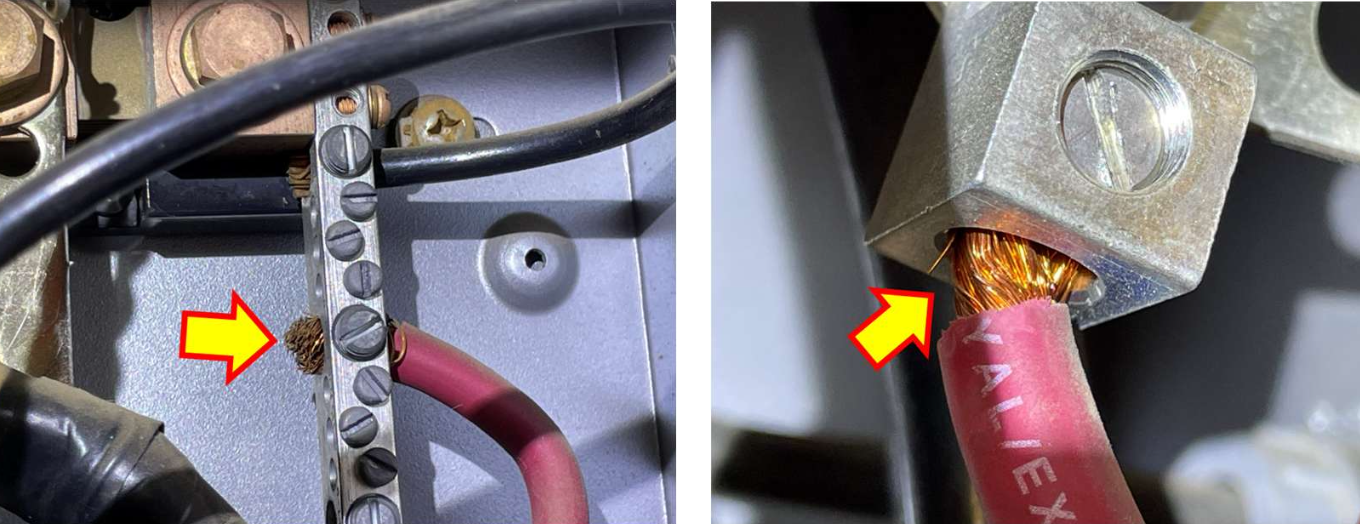
Missing ferrules is a code violation.
Most first-time rural buyers won't catch these issues, and that's precisely what a professional assessment is for.
What a proper off-grid solar evaluation includes
Every system is different, and potential buyers have different needs. Our assessments cover technical and safety items while evaluating whether the capacities meet the client’s immediate needs and future plans.
System identification
We assess the equipment and the original design intent, then compare the documentation with the actual implementation. Not having documentation isn’t an immediate deal breaker — we’ve seen and upgraded many old systems (in Caliente, we know exactly what the old “solar guy” got wrong) and have a good understanding of their capabilities.
Real-world performance testing
We verify open-circuit voltage measurements, DC input checks at the charge controller, string balance, and solar charge controller output under actual site conditions. This makes the difference between knowing a system exists and knowing what it produces.
Inverter assessment
We evaluate fault code logs, thermal performance, component condition, and compatibility with the property's load requirements. Many older inverters use active cooling systems (e.g., fans) that often become clogged with dust, compromising performance.
Solar equipment safety review
We examine wiring practices, breaker sizing and matching, grounding, galvanic corrosion at metal connections, and other fire or shock hazards. These issues are usually not deal breakers, but you should set aside budget to address them.
Everything else that runs on solar
In most rural properties, there are well pumps, float switches, irrigation controls, shop tools, and other non-household appliances to consider. A properly functioning solar system that can't reliably run the well pump just doesn’t fly. An ad hoc “DIY solar well pump kit” is not an effective way to address the issue.
Load analysis and remediation costs
We compare the system’s actual capacity with the buyer’s intended use and provide a clear assessment of whether the system is adequate, undersized, or oversized for the property. Then, we perform a tiered breakdown of the cost to restore, upgrade, or replace the system for targeted improvement and negotiation.
How to use a solar assessment report in a property transaction
A written assessment report is a negotiation tool. It replaces "the system is old 😕" with specific, documented findings and cost estimates tied to the insights. The value lies in its specificity: "The battery bank does not meet specs and replacement is estimated at $X" is a very different negotiating position than "we're not sure about that squeaky tracker pole."
But a comprehensive report isn’t just for buyers.
Buyers may use the report to request a price credit, require remediation as a condition of closing, or make an informed decision to walk away. Agents can attach it to a disclosure packet. Sellers may use one proactively to demonstrate the system's actual condition and remove uncertainty that might otherwise stall a deal.
Don't inherit someone else's problem
An existing off-grid solar system is either an asset or a liability. The only way to know is to evaluate it before you close — not after.
We provide on-site system assessments for rural residential or commercial properties in Kern County and surrounding areas. We test the system, document our findings, provide practical insights, and deliver a written report you can use as a negotiation tool and system improvement roadmap. Get in touch to schedule an assessment.