Protect Your Winery's Hospitality Revenue with a Resilient Energy Strategy
Tasting rooms and wine clubs account for 53% of the average winery's sales, and in some regions as much as 78%. However, the growing frequency and duration of outages and Public Safety Power Shutoffs (PSPS) threaten the guest experience and profit margins, even if you have a generator backup (more on that soon).
Here’s how you can build energy resilience to protect this critical revenue stream.
Your guest experience can’t afford disruptions
Tasting room and wine club revenues are the primary margin engine for many estate winery operations. This business model depends on a consistent, high-quality guest experience. What brings guests and keeps them coming back isn't just the wine: the property, the setting, and the experience seal the deal.
You can scream and shout in the backroom to put out fires caused by operational disruptions. But at the front of the house? Everything must remain calm, cool, and collected to meet customer expectations — even when the grid goes down.
How a grid outage impacts the hospitality revenue
A PSPS event can substantially impact the tasting room and event space revenue. Not only does the power go out, but the utility won’t tell you how long the outage may last. The power may come back in a few hours, or you may be out of luck for as long as six days. You have to make decisions like these in the dark (literally and figuratively):
Cancel event bookings for the next five days and issue refunds, then the power comes back on in a few hours. You lose five days’ revenue and risk your reputation. Or,
Keep upcoming event bookings and cross your fingers. Not having power isn’t an option, so you spend more than you earn on generator rent and fuel, while worrying that the noise will impact the guest experience.
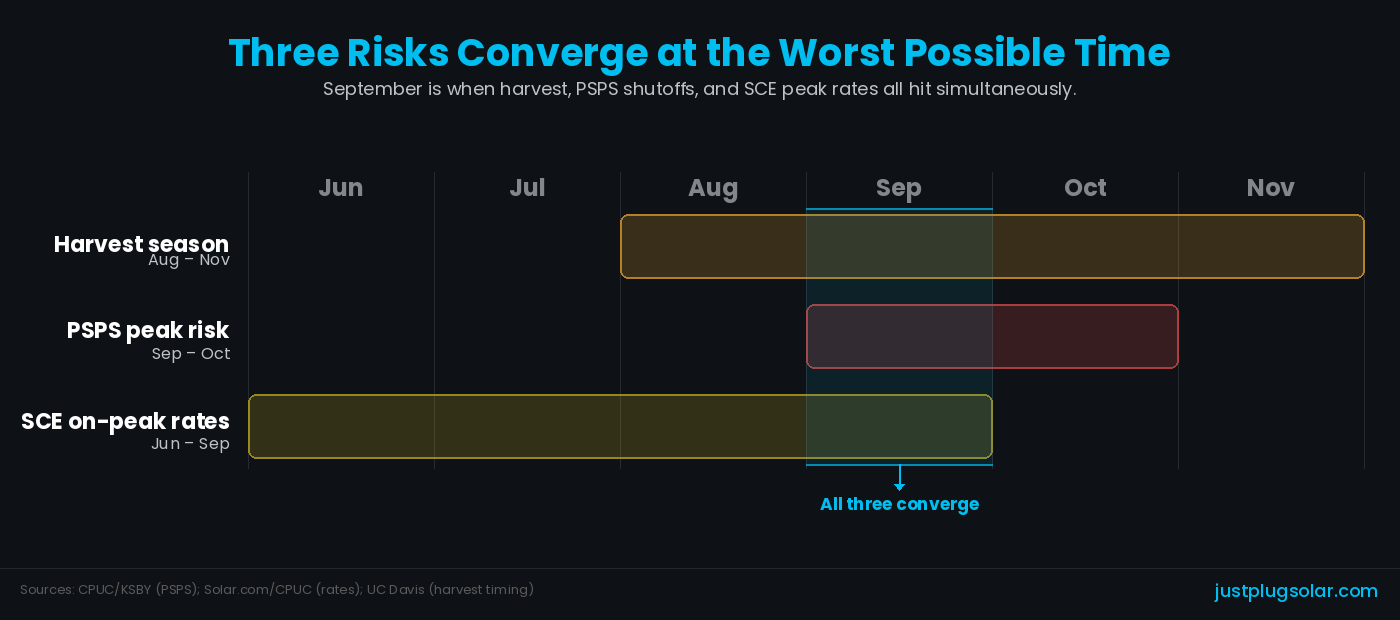
Here’s the double whammy: PSPS events peak in September and October, exactly when the tasting room and event calendar are at their fullest. Southern California Edison (SCE) has projected a 20–40% increase in both the frequency and duration of PSPS events as fire risk expands.
Besides refunds and rebooking scrambles, guests who have a disrupted experience may not return. The revenue impact of a grid outage extends well past a single PSPS event.
What about generator backup?
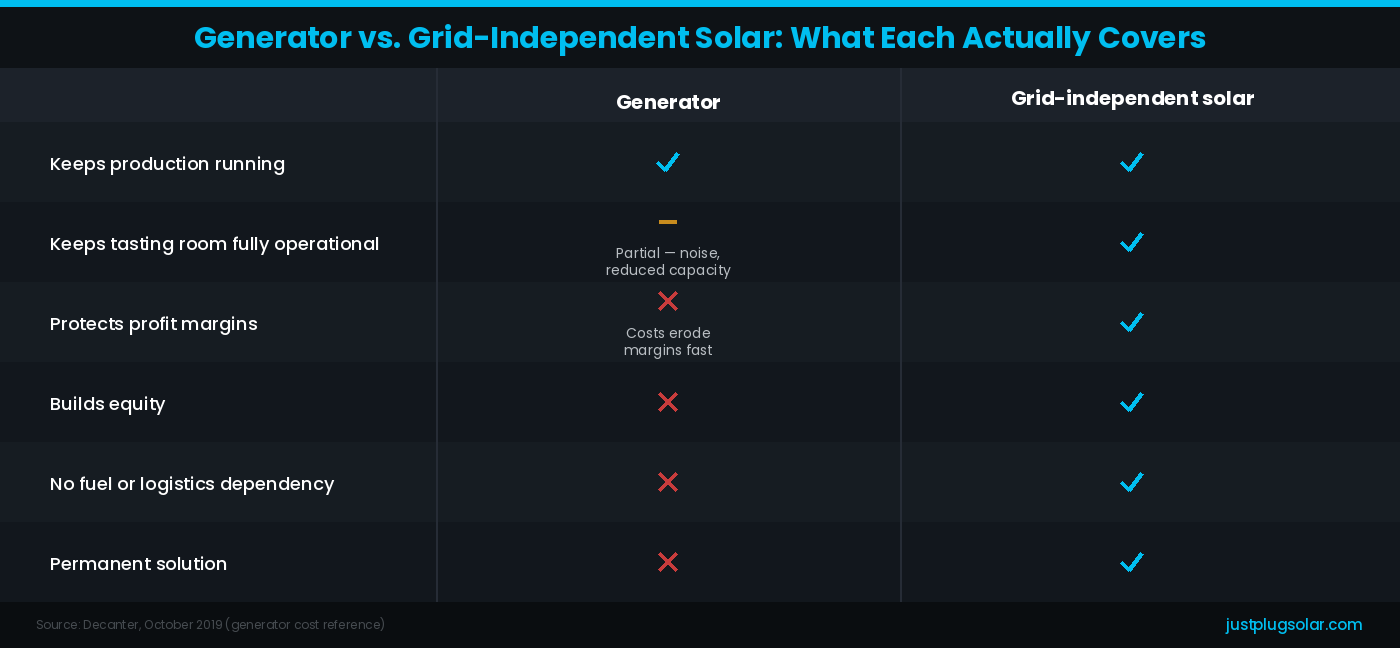
Even spending $10,000 per month on generator rental is a band-aid fix. A generator keeps production equipment running, but it doesn’t necessarily restore the full tasting room experience. Imagine the background noise and occasional flickering light. And, do you need to dial down the air conditioning so that the fridge can keep running?
Businesses, farms, ranches, and other wineries in the area will be competing for generator and fuel availability. Having the budget doesn’t necessarily mean you can get a hold of either. Even if you have a plan in place, you may be forced to run at partial capacity.
Moreover, costs add up thanks to fuel supply, maintenance, runtime reliability, and the logistics of keeping a generator fed during a multi-day outage. Worse, every dollar spent builds zero equity and solves nothing permanently.
Building your business resilience strategy around a generator isn’t a permanent solution. A generator may keep revenue coming, but your profit margins are fast eroding.
Generators have been the default solution for years simply because no other economically viable choices were available. But times have changed, and they’re no longer the only option.
Protect your profits by solving the root cause
The root cause of your challenges isn’t inherent in the winery business model. What if there’s no threat of PSPS events cutting off your power during harvest season in the first place?
Becoming independent from the grid solves the root cause.
Grid-independent solar produces power regardless of the grid’s status. A properly engineered system provides the capacity to keep business-critical activities running and the guest experience intact.
Unlike generators, you don’t have to worry about rental fees, refuel logistics, and maintenance headaches. Grid-independent solar works 24/7/365 to not only ensure business continuity but also slash your utility bills. It’s an infrastructure you own and control. You also build equity and add value to your property.
Boost business continuity with a resilient energy strategy
A resilient energy strategy is essential for ensuring business continuity and profitability. It protects the guest experience, your recurring revenue, and your reputation.
Whether you’re starting with no solar or already have grid-tied solar, we can help you design a roadmap to grid independence — addressing your unique business, operational requirements, and growth plan. Let’s talk.